The Great Displacement is coming

Daryl HattonSocial issues

Technology is driving a massive change in the availability of jobs.

And it will hurt everyone, not just the low end of the socio-economic spectrum.

We are already seeing the edge of the wave. At the new restaurants in Toronto airport you place your order on a tablet at your table. People bring the food. It means half the staff to service the same number of customers. Or half the jobs of a similar size restaurant. When autonomous robots get a little cheaper even the food delivery staff will go. All but a handful of jobs will be gone.

Check out this article on LinkedIn:

https://www.linkedin.com/pulse/silicon-valley-rightour-jobs-already-disappearing-andrew-yang

The article gives stats on the forecast disruption to driving industry jobs. Adding 2 to 3 MILLION people to the pool looking for work in the US will drive wages down for those that remain. It may take a decade to get going but then the impacts will be felt quickly and intensely.

I’ve seen a stat where in the auto industry 70% of the jobs at one plant were replaced by robots and defects dropped by 80%. These people don’t just go down the road and get another job. They are out of that line of work permanently. And they are not the best group for job retraining at the scale needed to give them a new career. The result is they drop out of the economy (lowering the “participation rate”) and sometimes succumb to substance abuse and/or depression. Without income they also don’t buy as many goods and services depressing the economy for everyone.

We need to rethink our social compact and figure out how to get through this coming “Great Displacement” and take care of these people. After all they are not some abstract group but our relatives, neighbours, friends and especially our kids. If not, those people out of work will become desperate and angry. They might even elect an autocrat to represent them who will promise to make things great again. It isn’t possible – there is no going back. And the charade of pretending it can be done is not good for anyone.

The first step to solving a problem is acknowledging you have one. And we have a big one.

New Ventures BC Competition crowdfunding presentation

Daryl HattonPersonal

I had a blast delivering this talk on crowdfunding at the New Ventures BC Competition session on Capital Planning. I cover not only the various big picture crowdfunding models but give examples of both securities (equity) and rewards (incentives) crowdfunding campaigns.

Check it out:

Damned if we …

Daryl HattonConnectionPoint, Entrepreneurship, FundRazr

When I started FundRazr I never expected we’d end up on the horns of a moral dilemma…

Crowdfunding helps people deal with life’s financial challenges by collecting contributions from family, friends, neighbors, co-workers and others in our personal networks. Sometimes these challenges are tragic in nature such as for emergency healthcare or recovery from accidents and are easy for the community to get behind and support. However, as crowdfunding has grown, some of the challenges are starting to involve the “messy” parts of living in a complex civil society.

Last week brought a great example of this. Michael Slager, a white South Carolina police officer, was captured on video shooting eight rounds into the back of an unarmed and fleeing black man named Walter Scott. On receipt of the video, the chief of police fired Slager and arrested him on charges of murder. Given the current racial tensions in the US this situation has been covered extensively by the media.

A social media group was formed on Facebook to help support and defend Slager. They launched a crowdfunding campaign on GoFundMe to raise funds for Slager’s legal defense. After two days, GoFundMe shut down the campaign on grounds it violates their Terms of Service which provides for stopping campaigns that match a list of issues including:

  • Campaigns in defense of formal charges of heinous crimes, including violent, hateful, or sexual acts

The defense group shifted their efforts to running a similar themed campaign on Indiegogo. At the time, an Indiegogo spokesperson claimed, “Indiegogo allows anyone, anywhere to fund ideas that matter to them and just like other open platforms — such as Facebook, YouTube and Twitter — we don’t judge the content of campaigns as long as they are in compliance with our Terms of Use.”

Two days later, and after suffering significant negative social media pressure, Indiegogo terminated the campaign claiming it did not meet the criteria of their Trust and Safety team.

On FundRazr, we had one campaign start to raise funds for the same purpose as the campaigns on the other platforms. However, the campaign owner deleted it after receiving negative social media feedback and before we evaluated it. Even during the short time the campaign was live, it attracted traditional and social media attention and they demanded to know if we intended to allow the campaign to continue. If we had, given the tone of the queries we can safely assume we would have had to endure an onslaught of negative media coverage.

Some would say, “And you’d deserve it! Why would you allow him or anyone who supports him to run a campaign? He committed a terrible crime and doesn’t deserve any help!”

While I personally agree that it appears he committed a despicable crime we have a number of important concepts in our supposedly civil society that become very important in situations like this.

The first is the presumption of innocence until proven guilty.

It seems pretty clear from the video evidence that Slager did what he has been charged with. We have a legal system run by very qualified and experienced individuals whom we entrust to rule on this issue in accordance with the laws of our society and dispense punishment (if appropriate) on our behalf. I expect they’ll do a good job and justice will be served.

Yet, in this case, some vocal members of the crowd (and some members of the media for that matter) are outraged at his (alleged) crime and are looking for immediate and satisfying punishment. This is vigilante behavior.  As you can surely see, this is in direct contravention of a principle most of us would desperately want to rely on if we made a major mistake in our own lives and is a cornerstone of a fair and just legal system. In addition, as a side effect, in the vigilantes’ view anyone associated with wanting to help him is immediately suspect and judged morally inferior. This is worrying.

The second is the right to a fair trial.

These days a trial involving charges of murder, especially one with high profile media coverage, can be very expensive. It can be expected that in this sensitive situation the prosecution will invest significant time and resources to develop and present their case. In that light, and to fully counter that investment, the defense team will need to expend similar resources. This level of expenditure would bankrupt most people if they could even afford to pay any of it. Crowdfunding is one way a person could help themselves in this circumstance.

Bankrupting the defendant can be viewed as all well and good if we think we are just punishing the person accused of the crime. But by extension, this also affects Slager’s pregnant wife and unborn child and his two step-children. While we may question her judgement for being involved with a person capable of this crime it is highly likely there is way more going on than we can fully learn and understand and it certainly doesn’t make sense to accuse the unborn child or step-children of any complicity or for them to suffer because of it.

One of the concepts expressed by the social media group raising money was that Slager’s wife may require financial support through what will be a very challenging period in her life. While I doubt the intentions behind the campaign were actually good (I suspect someone was taking an opportunist view of the situation and was trying to inject themselves into it for other reasons) there are compassionate arguments that can be made to fully justify helping her out. Sadly, given the nature of the crime and the anger of the community this is not likely to happen. And therein lies the rub.

While the Indiegogo campaign was live, there were loud and angry calls across social media for the company to shutdown (censor) the campaign. When the initial protests were not responded to immediately, the crowd started to demand a boycott of Indiegogo and even tried to raise money using the service (!) to place a billboard across the street from their headquarters accusing them of supporting racist cops.

At FundRazr we’ve experienced similar calls in the past for boycotts and threats of disruptive behavior against ourselves and other campaigns on our platform. It cannot be said strongly enough that this is bullying, disrespectful, censoring, anti-social and even vigilante behavior that has no place in a civil society.

We’ve managed to survive these attacks in the past but usually because the issues were less sensitive and dramatic. For example, our platform is currently used to raise money for the legal defense of Julian Assange and Edward Snowden among others. We could have barred their campaign on the basis that some in the US government painted their actions as treasonous acts. However, the same issues of innocence and fair trial are present in those situations as well and we elected to allow the campaigns to continue to help support the fundamental principles behind them. This occasionally results in negative social media but in general has been tolerable.

I care deeply about respecting and supporting the foundations of our society and especially in the areas of fundamental freedoms. We are in a unique situation in our small company in that we are creating a massive change in the way critical situations around the world are funded. As a very young company and young industry we are constantly encountering new situations and are developing our policies and responses as we go. We take this duty very seriously and do our best to act with the best interests of society in mind at all times. Our hope is that we can provide a platform that can be trusted to not only operate securely and in the best interests of our customers and community but to be there to help people when they need it most.

However, we are very vulnerable to the actions of the vigilante crowd. If we stand up for what is right and just and in protection of our joint fundamental freedoms we stand the risk of losing everything we have built and killing off our ability to execute our mission to help everyone who needs a mechanism to deal with critical funding challenges in their lives.

But every time we pull back and censor a campaign based on some arbitrary criteria we might establish to keep ourselves safer while still delivering our service we weaken our society. We can think of this like seeing bullying behavior in the workforce and turning away without addressing it so that we keep the peace. Eventually the bullying behavior will take over as the norm and everyone will get hurt.

So we are damned if we do (allow controversial campaigns to run) and damned if we don’t. In the first situation we harm ourselves and our ability to help our customers as we take the brunt of their social media displeasure. In the second, we undermine our fundamental freedoms and slowly chip away at the foundations of our society.

I likely can’t be perfect in this but I need to be courageous and chose to let campaigns run. Many people gave their lives to help me have these freedoms. I need to remember that and act accordingly.
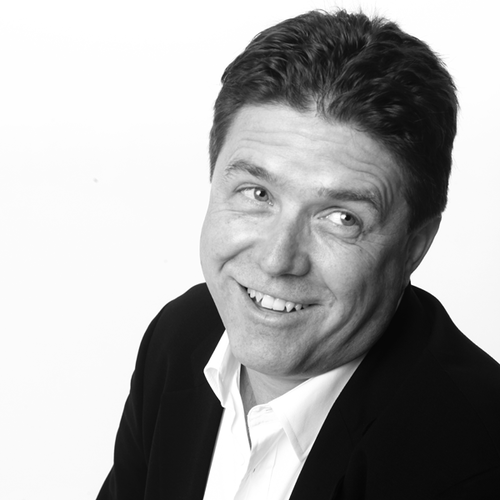
In memory of Michael Joss

Daryl HattonPersonal

This is what I said today at the Celebration of Life of Michael Joss.

My name is Daryl Hatton. I met Michael through Judy Bishop. Judy was working with my company as a strategic advisor. For a little while in 2010 she went kind of quiet. When we caught up again it was obvious from the sparkle in her eye and the spring in her step that something exciting was happening in her life. She explained she’d reconnected with Michael and this was a “good thing”.

I first met Michael in person at a technology industry event he attended with Judy. Seemed like a nice guy. Judy was radiant when he was around. I was happy for her. Didn’t think much more about it.

My wife Myra and I were heading to the Okanagan for a short getaway to tour some wineries. Judy insisted we call Michael and get a tour of La Stella and Le Vieux Pin. Sounded good so we set it up.

We were expecting we’d meet, shake hands and Michael would show us around for a few minutes and we’d be on our way. What happened next wasn’t that at all and has become one of my most treasured memories of the Okanagan.

Michael essentially took us under his wing and over the rest of the day explained in great detail and in a very entertaining way many aspects of the wine business in the region; the history, the players, the terroir, the techniques, the economics and even the politics.

He did this while generously taking us on a personal tour of not only his wineries but many of the others in the area. We ended up at Le Vieux Pin later that afternoon just as they started crushing chardonnay. He introduced us to his team, explained the whole process and snagged some of the fresh juice for us to try. For a couple of neophytes in the world of wine, this was AMAZING!

Along the way we listened in awe as Michael told us his life story. Each chapter was incredible: funny, surprising, insightful, elegant, personal, sometimes poignant and very full of goodwill.

After he finished describing each adventure, he would pause, his eyes would twinkle and then he’d say “And Then The Phone Rang” and off we’d go and dive into a new tale. What a story teller!

With his accent and his good looks, his gentlemanly manner, his dry humor and that mischievous sparkle in his eye, I was glad he was involved with Judy or else he might have charmed the pants off Myra!

I’m honored that we became friends. We’ve had a number of amazing meetings over dinner where we got to talk about life and about business and about people and the strange miracle of our human existence. What I admired about Michael in these conversations was not only his intellect, his wisdom and his humor but his generosity, his compassion and his humanity.

In December we met again. I explained the new direction I’m taking my company and was surprised to see Michael was really interested and eager to help out.  We decided that after they returned from Mexico we’d get together and figure out how we could work together. I was thrilled!

Obviously that didn’t work out and I’m deeply disappointed we didn’t have a chance to give it a try. It would have been another wonderful adventure for both of us. I was inspired by Michael to look at my life and my work in a bigger context and it has given me courage to try to follow his example of a passionate man accomplishing extraordinary things. I can only wonder what we might have accomplished together.

My only regret is that I didn’t push Michael harder to put his stories to paper so that more people had a chance to experience the richness of his life and his being.

Michael, you will be missed. I’m hoping we meet again someday and really look forward to hearing of new adventures that lead off with the line: “And Then The Phone Rang”.

Good riddance 2014! And yet…

Daryl HattonPersonal

There is no doubt that 2014 was a very challenging year for me and my family.  I encountered many situations that would be considered “difficult” all on their own and almost overwhelming when they occurred all at once. Here is a partial list:

  • We lost my step-dad
  • We lost a good friend and neighbor
  • My step-sister had breast cancer
  • My father had open heart surgery and a quad bypass
  • My mother started to experience some serious health challenges
  • I had a heart attack and complicated quad bypass surgery.
  • My startup business was challenged by my need for time off to recover at a time when we were facing disruptive changes in our markets that required 150% of my attention
  • And many, many, many more.

I’m apparently far from alone in feeling like this because many of my friends are rating their year as challenging as well. Checking on my news feeds it sometimes seems that wherever I look in the world, be it at family, friends, my business, our local or global community, the situation is tumultuous. It’s not very uplifting and easily a bit scary as well.

I’ve caught myself saying things like “I can hardly wait for this year to be over” and “Hey 2014, don’t let the door smack your ass on the way out.”

But as I contemplated the “year that was” on New Year’s Eve I started to realize that this way of thinking was hurting me. For one, it violates one of my core tenets that says it is crucial to always move “towards something” and never “away from something”. Moving away from something that is big and frightening without a clear sense of direction can be dangerous as it can lead into even more difficulties (e.g. think of looking over your shoulder at a near accident and driving off the road). And it was starting to sound suspiciously like I was falling into a “victim mentality” for which I have little patience in others and none in myself. It also seemed like I was forgetting another of my core tenets that all challenges are gifts in disguise.

With those things in mind I set out to give myself some acknowledgement for handling the challenges, to try to discover what the gifts were, and then to figure out how I can best use them moving forward.

I think one key lesson I’ve taken from this year is that I have to finally acknowledge that I’m not a superman and that I can’t just solve any issue that comes my way by dialing up my energy and attacking a problem head on until I wear it down. This has definitely been a pattern for most of my life until now. I wasn’t a great ice dancer but I compensated by working harder than others. I had no idea how to play let alone coach lacrosse but with some extra effort I got some good results with my teams. I haven’t had the same skills, training or education as others in my career but I’ve definitely had the work ethic that helped me overcome and create some unexpected successes.

This year was different in that to overcome the challenge of my heart attack and surgery I had to do the opposite of what I’ve always done and dial my life back to let myself heal. The doctors told me that healing after heart surgery takes three to six months before you start to feel “normal” and much longer before you are “yourself again”. I heard “three months” and set out to be a “poster child” for recovering from heart surgery. Funny, but it hasn’t worked out that way. Just over five months into recovery I’m still not feeling like I can handle a full regular work day let alone the 12 hour days I was doing before my heart attack. And where I’d normally just dig a little deeper into my energy reserves to power through the issue, in this case my energy was already low with no way of getting it up without hurting myself and making the situation worse. I was stuck. Frustrating!

After thinking about it a bit, the way through this mess seemed to be to focus my efforts on what is truly most important and therefore direct my limited energy into solving the most crucial issues in my personal and business lives. After trying to do this for a little while I’ve come to the conclusion that I actually suck at focusing. I’ve always said that I’m a bit ADD but this is something more. In the past, I’ve apparently given lip service to the need to focus and then gone ahead and done way more than I should because I couldn’t figure out what were the most important things to do. Doing it all was simply the easier way to handle the situation. Now that I can no longer just power through issues this deficit in my skills has become a big problem for me. I think that without the health challenge I would have been able to keep fooling myself about my abilities in this area and would have continued to suffer the insidious failures that creates.

So one takeaway from this year may seem obvious to everyone reading this post but it is simply, at a deep level, to acknowledge that I have more work to do on the concept of “work smarter, not harder” and must proactively make changes in my life so that I don’t fall back into old habits. I’ve had the gift of seeing for the first time two major dysfunctional behaviors that hold me back in both my personal and business lives and I have been able to identify how they need to change.

Breaking habits is hard to do. We rarely change behavior via the carrot; it is most often a result of the stick. One lingering side effect of the heart surgery is that when I push too hard and try to do too much I physically hurt. This is as good a stick as any to help me change my habits and is kind of a “bonus gift” if you will.

The thought that is very encouraging in all this is that when I resolve my issue and learn to focus more effectively (I won’t say “correctly” because I may never be good at it) and when I’ve had time to heal and rebuild my energy level, I’ll be even stronger and more capable than ever.

I’m looking forward again and moving towards something new.

Look out world, here I come!

What balance?

Daryl HattonPersonal

I had a heart attack followed by open heart surgery recently. I handled it really well and have been recovering rapidly. This has allowed me to head back to work relatively quickly. Which is good because my business needs my help. It has survived my “incident” reasonably well but market conditions and increased competition are causing “challenges” and I need to spend as much time as I can helping out.

Here’s the rub. The #1 thing I can do to improve my physical health as quickly as possible is to rest and take my time getting back to work. And the #1 thing I need to do to protect my financial health is to spend every ounce of my energy on my business.

Essentially the needs of two major aspects of my life are diametrically opposed. Where is the perfect balance? Does it even exist?

Many people would say “focus on your health”. And that makes tons of sense. Except that having started a business just a few years ago my personal financial situation is precarious – I’ve put everything I own into making this business work. If it fails it will cause me massive amounts of stress and duress. My heart attack was caused by a genetic predisposition accelerated by stress. Serious amounts of stress would not be good for me at all in the long term.

So my quandary? How do I find the balance between reducing my workload to reduce my short term stress and therefore heal more quickly and increasing my workload to reduce the potential for business catastrophe and huge long term stress? I’m an experienced entrepreneur who has been through some major ups and downs in my career so this is not the worries of a neophyte – the potential for business failure is very real.

So what do I do? At the moment, I’m deciding day-by-day, doing as much as I think I can without overdoing it, hoping it is enough to keep both me and my business healthy.

Fingers crossed I’m doing it well.