To Those of You Born 1930 – 1979

Daryl HattonHumor


TO ALL THE KIDS WHO SURVIVED THE
1930’s, 40’s, 50’s, 60’s and 70’s!!

First, we survived being born to mothers who smoked and/or drank while they were pregnant.

They took aspirin, ate blue cheese dressing, tuna from a can and didn’t get tested for diabetes.

Then after that trauma, we were put to sleep on our tummies in baby cribs covered with bright colored lead-base paints.

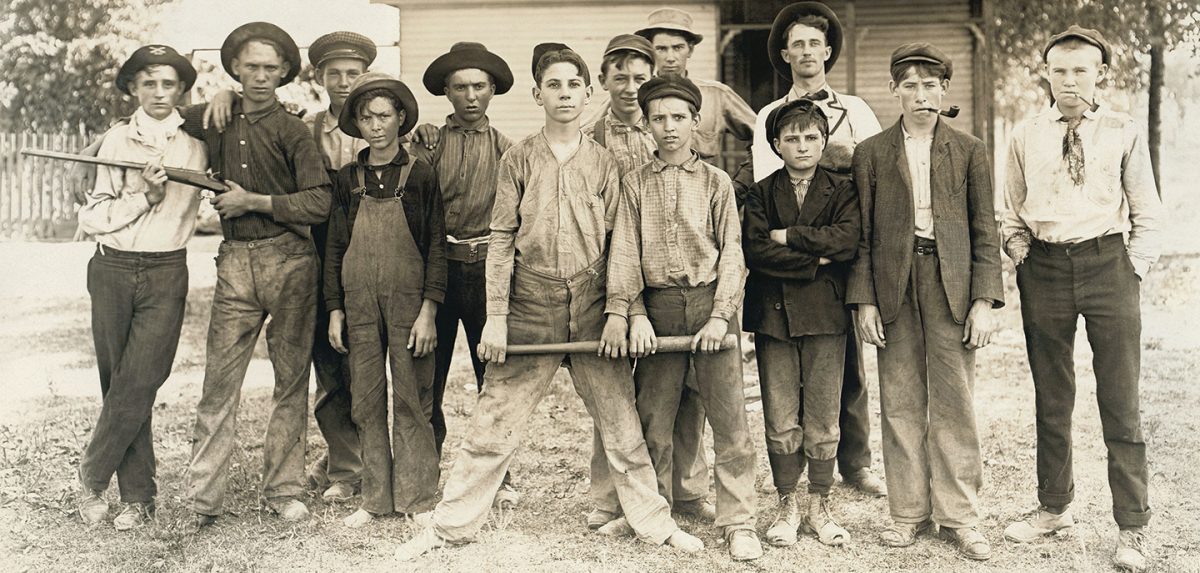
We had no childproof lids on medicine bottles, locks on doors or cabinets and when we rode our bikes, we had baseball caps not helmets on our heads.

As infants & children, we would ride in cars with no car seats, no booster seats, no seat belts, no air bags, bald tires and sometimes no brakes.

Riding in the back of a pick- up truck on a warm day was always a special treat.

We drank water from the garden hose and not from a bottle.

We shared one soft drink with four friends, from one bottle and no one actually died from this.

We ate cupcakes, white bread, real butter and bacon. We drank Kool-Aid made with real white sugar. And, we weren’t overweight. WHY?

Because we were always outside playing…that’s why!

We would leave home in the morning and play all day, as long as we were back when the streetlights came on.

No one was able to reach us all day. And, we were O.K.

We would spend hours building our go-carts out of scraps and then ride them down the hill, only to find out we forgot the brakes. After running into the bushes a few times, we learned to solve the problem.

We did not have Play stations, Nintendo’s and X-boxes. There were no video games, no 150 channels on cable, no video movies or DVD’s, no surround-sound or CD’s, no cell phones, no personal computers, no Internet and no chat rooms.

WE HAD FRIENDS and we went outside and found them!

We fell out of trees, got cut, broke bones and teeth and there were no lawsuits from these accidents.

We ate worms and mud pies made from dirt, and the worms did not live in us forever.

We were given BB guns for our 10th birthdays, made up games with sticks and tennis balls and, although we were told it would happen, we did not put out very many eyes..

We rode bikes or walked to a friend’s house and knocked on the door or rang the bell, or just walked in and talked to them.

Little League had tryouts and not everyone made the team. Those who didn’t had to learn to deal with disappointment.

Imagine that!!

The idea of a parent bailing us out if we broke the law was unheard of. They actually sided with the law!

These generations have produced some of the best risk-takers, problem solvers and inventors ever.

The past 50 years have been an explosion of innovation and new ideas.

We had freedom, failure, success and responsibility, and we learned how to deal with it all.
If YOU are one of them? CONGRATULATIONS!

You might want to share this with others who have had the luck to grow up as kids, before the lawyers and the government regulated so much of our lives for our own good.

While you are at it, forward it to your kids so they will know how brave and lucky their parents were.


Kind of makes you want to run through the house with scissors, doesn’t it ?

— Cut and pasted from an email circulating around and around…

We picked a good time to start a business

Daryl HattonConnectionPoint, Entrepreneurship

Rob Lewis recently wrote a TechVibes article on the dismal state of venture capital investment in Canada. It seems that the VC investment model is under severe pressure and many tech businesses can no longer enjoy the benefits of VCs doling out easy money to their startup.

We don’t see this as a huge threat and, in fact, believe it is an opportunity.

Frankly, VCs made some stupid, follow-the-leader investments in the late 1990s. If one invested in a certain type of Internet application, a bunch of others jumped right in with similar (but not visionary) companies in the hopes of being a “fast follower”. For the most part, this didn’t work very well for the companies involved and killed off the VC’s investment.

However, it did do a good job of confusing some markets for a while making it all that much harder for the original visionary startup to execute their plan.

If a bunch of VC money has dried up, the “fast follower” group is less likely to get funded as there is only so much money to go round. This makes life easier for the visionary who will likely get funded regardless – that is what strong entrepreneurs make happen. We are entering another growth stage of innovation in web applications – that is what recessions initiate. That means new market opportunities are emerging – and that is what entrepreneurs love to see.

We are visionary. We’ll get funded. We’ll ride this next wave with skill and create fantastic value for our shareholders.

I like the idea of not having to fight off a bunch of fast-followers with VC money to burn.

It makes our job easier.

Whistler – the rules of the game

Daryl HattonFun

The game of Whistler originated in Whistler, BC, Canada in the summer of 2005 in the Fairmont Chateau Whistler hotel. It is loosely based on the game Thirty-One and is ideal for families to play together given the simple rules but potential for strategic play that challenges parents and children alike.

PLAYERS. Two to six. The game becomes progressively harder with more players and is best played with three or four.

CARDS. The pack of 52. The cards in each suit rank A (high), K, Q, J, 10, 9, 8, 7, 6, 5, 4, 3, 2. Aces count 11, face cards count 10 and all other cards count their face value. Suits have no relative value. Aces may be also used to make runs at the low end of the rank (see SPECIAL HANDS examples below).

PRELIMINARIES. Cards are drawn, high card is the first dealer. Players who tie for high card each draw again until the tie is broken.

DEALING. Dealer shuffles the Deck. Each player then receives four cards face down, dealt one at a time beginning with the player to the
dealer’s left. One additional card from the deck is turned face up in the middle of the table to begin the Discard pile. The remainder of the deck is placed next to the Discard face down and forms the Stock. Players pick up their cards to form their Hand.

THE PLAY. The player to the dealer’s left begins play. In turn, each player draws either the top card from the Discard or the Stock. The player adds the new card to her Hand and selects one card from the Hand to discard. If the cards in the Hand form one of the Special Hands, the player announces the name of the Special Hand, places the discard card face down on the Discard pile and play ceases with the player declared the winner of the game. If not, the player places the discard card face up on the Discard pile and play continues with the next player to the left.

KNOCKING. If, during a turn, a player believes her hand has higher total points in a single suit than any other hand in play, the player may Knock by rapping her knuckles on the table before discarding. Knocking signals that all other players must each complete one more turn. After the last player has finished her turn, the Hands are revealed and the point totals calculated. The player with the highest point total in a single suit wins. If any player acquires a Special Hand during the Knock round, they immediately win the game and no other player may score. Any player(s) who has more points than the Knocker or wins with a Special Hand is declared to have Beat the Knocker and scores double (see SCORING). Ties are awarded to the Knocker for having the courage to test their hand by Knocking.

SPECIAL HANDS. Three special types of hands are immediate winners in Whistler and cause play to cease. They are:

Whistler: The four cards in the Hand are of the same suit and add to 41 points.
Runner: The four cards in the Hand are consecutive and from different suits. For example – 6 ♦, 7 ♣, 8 ♠, 9 ♥. Aces may be either high or low i.e. J, Q, K, A or A, 2, 3, 4 but runs may not wrap around i.e. Q, K, A, 2
Party: The four cards in the hand are of the same rank but from different suits. For example – 5 ♠, 5♦, 5 ♥, 5 ♣.

SCORING. Player with the winning hand is awarded one wooden tooth pick. Players who Beat the Knocker are awarded two wooden tooth picks. Player with the most tooth picks at the end of the session is Grand Champion. Candies (such as restaurant mints), sugar packets or any other small objects may be substituted for tooth picks.

IRREGULARITIES IN WHISTLER

MISDEAL. There must be a new deal by the same dealer if a card is found faced in the pack or if a card is exposed in dealing. There must be a new deal by the next dealer if dealer gives the wrong number of cards to a hand.

WRONG NUMBER OF CARDS. Before play: New deal (see Misdeal). During play: A hand found to be short draws cards from the Stock without penalty.

INVALID SPECIAL HAND. Player declares they have a Special Hand but on inspection is found to not be the case. Player shows his hand to all other players, corrects his discard (i.e. face up) and play continues.

KNOCKING AFTER DISCARD. A Knock after the player discards but before the next player draws a card is allowed to stand. A Knock after the next player draws a card is ignored.

STRATEGY IN WHISTLER.

Flexibility in strategy is key in playing Whistler. It is not uncommon to change strategy two or more times in a game depending on cards played by others or cards acquired during play. It is important to track not only what cards have been discarded but what cards other players are accumulating as this hints at the composition of their hands and helps determine the potential of a player’s hand. In many cases, it may become clear that the current cards in the hand cannot win given other cards that have been played. For example, having a strategy of collecting Hearts because your hand holds the A ♥ and 8 ♥ no longer makes sense if other players have discarded the K ♥, Q ♥ and 10 ♥. This is because the remaining possible hands have a low probability of winning.

The Party hand is the most difficult hand to achieve as it requires four specific cards. A Whistler hand requires four out of a possible five cards in the deck.

When playing for a Runner, low card runs have a higher probability of success than high card runs as the player to the right is more likely to acquire and keep high cards (i.e. aiming for Whistler) and therefore not pass them on through the Discard.

A good candidate for a Runner is a hand containing a run of three consecutive cards in different suits. A card of the fourth suit at either end of the run would win. For example – 3 ♣, 4 ♦, 5 ♥. Either the 2 ♠ or the 6 ♠ would win.

A better candidate for a Runner is a hand containing a run of three consecutive cards in different suits with the fourth card repeating one of the other three in the same suit as one of the others. For example – 6 ♥, 7 ♥, 7 ♣, 8 ♦. In this case, there are four possible cards that can form the winning hand. 5 ♠, 5 ♣, 9 ♠, 9 ♣.

The strategy for Knocking depends on the duration of the game. If it is very early in the game, a hand with point totals above 20 can frequently win. If it is later in the game, point totals less than 30 would be a risky Knock unless it is clear that others are trying for Runner or Party hands.

VARIATIONS.

There is a variation of the standard Whistler game called Whistler Village. In this game, if a player Knocks, the other players, at their option, may offer to help the player to their left by asking “What do you need?” when it is their turn to discard. The player to the left may request a specific card or type of card e.g. “the Seven of Diamonds” or “any high Spade” and the player may elect to fulfill this request with his discard. Play continues as in the regular game.

Another variation of either the standard Whistler game or Whistler Village is to replacing rapping on the table with whistling a few notes.

West Coast Whisky Society Robbie Burns Toast to the Lassies

Daryl HattonHumor, Poetry, West Coast Whisky Society

Here is the Robbie Burns Dinner toast to the Lassies I penned for the West Coast Whisky Society…


Old Rabbie Burns, a man ‘mongst men,
Sure had his way with women,
His wife, his maid, four girls (it’s true!),
This many bore him children!

And there was talk of many more,
High and lo abou’ the country.
‘Twas no matter, high or common,
They’d fall, like night, for poetry.

His suff’ring wife, the bonnie Jean,
When asked how she survives,
Responded slyly, patiently,
“He should ha’ had twa wives.”

What was special ‘bout this wee man,
That made the women swoon?
Perhaps he simply loved them more,
From this, they weren’t immune.

For Rabbie wrote in splendid verse,
His feelings real and deep,
‘Bout hair, and eyes, and skin so fair,
And the hearts he’d love to keep.

Burns was blessed, as we men are,
Fine lassies all around,
Yet best of all he saw the truth,
In their magic was spellbound.

Fortunately I’ve learned from him,
To look a little deeper,
And see the value of my lass,
Remembering why I keep ‘er.

Just look around, right here and now,
We’re blessed with these fine lassies,
As good a flock as e’er you’ll find,
The focus of our fancies.

Not long ago (or so it seems),
Our hearts were all a’flutter,
A simple smile or touch of hand,
And then, like boys, we’d stutter.

These fetching girls so young and fair,
Kept all of us enraptured,
We wooed them with our greatest charms,
Until they had us captured.

We strutted ‘round, her by our side,
As proud as cocks were we,
And dare another lad come near,
“That girl, she’s here with me!”

We loved their hair, we loved their eyes,
We pined all day and night,
We loved their laugh, we loved their smile,
We knew it must be right.

So lost were we, we bought a ring,
And talked of a big wedding,
And what she’d want, we’d gladly give,
Then prayed she’d share our bedding.

And wed we did, good friends all ‘round,
Our families joined together,
And bed we did, our lust profound,
On bedsteads or in heather!

And then the wee bairn came along,
Our lives took on new meaning,
The lassies, bless their hearts and souls,
Stepped up; still did the cleaning.

The days were long, the nights were too,
Yet they rarely did complain,
Where would we be without our lass?
I’ll wager; gone insane.

So charming then, so young and pure,
We wanted them for sex,
Mature’d now, like fine liqueur,
Our feelings more complex.

You’ve heard my poem, now stand with me,
As I sincerely recommend,
We take the time to celebrate,
Our lover, companion, friend.

It’s time good lads, indeed time past!
With Whisky fill your glasses,
And voice a toast, let’s hear a boast!
To these … our bonnie lassies.

Starting a company is hard

Daryl HattonConnectionPoint

It is hard to explain to people (at times) why starting a new company is so hard. I think Paul Kedrosky did a great job in the following quote:

Creating a successful startup is among the hardest things you can do in a capitalist economy. Entrepreneurs must successfully navigate a sea of multi-dimensional uncertainty, from technology (will it work?), to people (do I have the right employees?), to market (will anyone care?), to financial (can I finance doing this, and can I then sell the produce or service for more than it costs?) At big companies you can fail at launching a product, fail at hiring people, fail at making money on a product, and fail at figuring out whether something will work. Your big company will probably be unaffected, and you may even get promoted. Do any of those things wrong at a startup and, in all likelihood, you’re dead. You are wandering a maze of dark and twisty passages — most of which are paved with trapdoors to hell.

If you like this quote, check out the whole article:  Paul Kedrosky – Why I Love Venture Capitalists

I mention this because, in spite of all the good things happening this week in ConnectionPoint, I still am aware of the tremendous risk we are taking.

Funny thing is, I know we can handle it. Am I insane or just fortuitously optimistic?

Witness to the start of a new era

Daryl HattonConnectionPoint

Sometimes, I’m very aware how lucky I am. Today is a good example. I was fortunate to be present when Google launched Wave.

Google Wave

I can hear the snide comments now: “Give me a break – it is just a piece of software”. “Techies – just a bunch of self-centered geeks”, “OMG, get a life”.

This is different.

It is impossible to describe Wave succinctly – there are too many aspects that, by themselves, are very important and impactful.

However, there is one thing it does that stands out for me – Wave is the first big implementation of the transition from request/response web metaphors to a fully interactive, real-time collaborative web. By itself, this is very cool. But it is the stuff that can run ON TOP of this that is really exciting. Bear with me for a moment.

During the demo, Lars Rasmussen opened a wave (collaboration document) with a colleague from France. When Lars typed something into the document, his colleague could see each individual character immediately as it was typed and vice versa. The VERY cool part of this is that as Lars typed, his words were also translated into French on-the-fly i.e. in real-time. While his colleague typed something in French, his words were also translated instantly into English. Simply put, they could carry out a conversation in their native language with instant translation into the other language using Google’s vast knowledge of patterns in the information published on the web to improve the quality of the results. By itself, this is VERY COOL.

But take it a step further. In a few years, mobile devices (which will run Wave), will be able to convert speech to text and text to speech in real-time with very high fidelity. If you let Moore’s law run for another few years and combine these speech technologies with Wave, faster wireless and Bluetooth technology, I’ll be able to have a conversation with someone in any one of perhaps 80 languages (the current standard – sure to expand) with REAL TIME translation of what I’m saying into their language and REAL TIME translation of what they are saying into English.

If you are a fan of The Hitchhiker’s Guide to the Galaxy you’ll recognize that while you won’t have something slippery INSIDE your ear i.e. a mythical babelfish, you’ll have something light-weight and comfortable hanging OUTSIDE your ear (and a box the size of a pack of cards in your pocket) that will give you the same result – the ability to speak with and understand almost anyone on the planet. “Unbelievable” is simply not strong enough.

To me, Wave is about improving communication. I can see how it will do this across national and cultural boundaries and across race. When we improve communications, we increase understanding. When we increase understanding, we reduce fear and increase tolerance. When we increase tolerance, we reduce aggression and conflict. When we reduce conflict, we increase peace and stability. When we increase peace and stability, fewer people die needlessly.

What a wonderful gift from “just a piece of software”.

My hat is off to the Wave team and to the visionary leaders at Google who encourage this kind of work.